
Daisy Digital Bouquet
A daisy digital bouquet sends pure cheer by link. Pick daisies, write a note, and send innocent virtual flowers that reveal instantly. Free, no app, no sign-up.
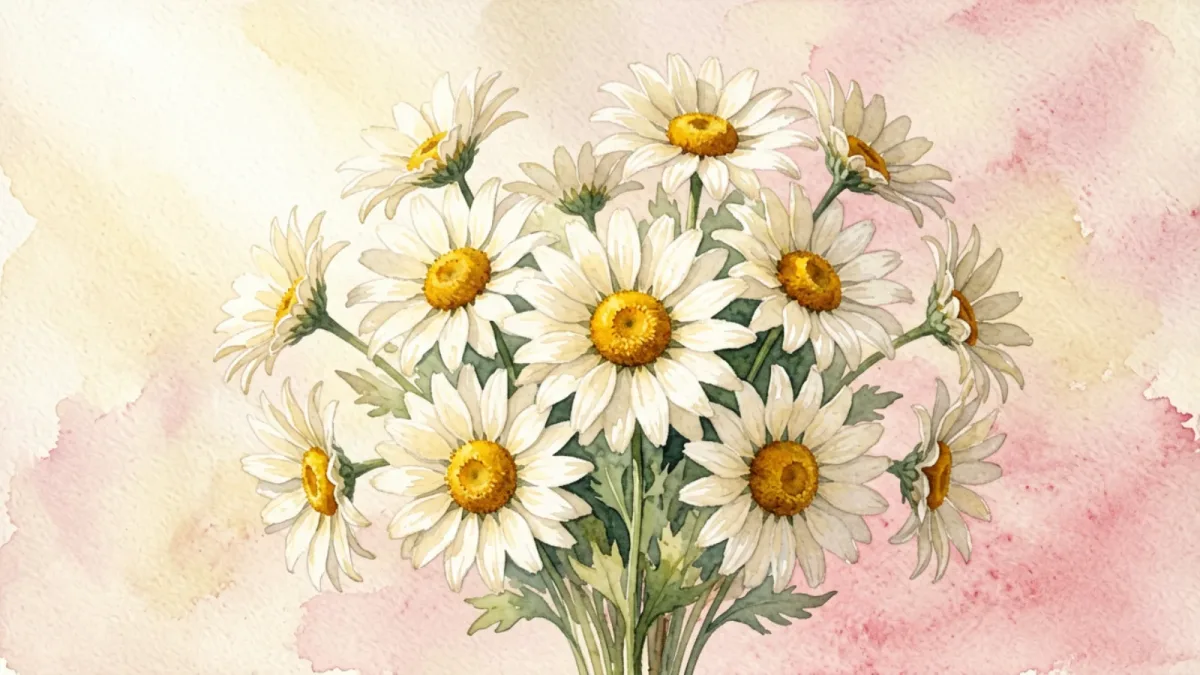
A daisy digital bouquet is the pick-me-up of the flower world, distilled into a single link. You choose a few bright daisies, write a short note, and send someone the kind of gesture that exists purely to make them smile. When they open the link, the blooms unfold against the card you picked, and the message lands before they've read a single word — because everyone already knows what a daisy feels like.
That's the quiet power of the daisy. It carries no heavy baggage, demands nothing, and never reads as too much. It's the flower you reach for when the goal is simple: brightness, for its own sake, on a day that could use some. And because it's free and instant, you can send it the moment the thought crosses your mind instead of letting it slip away.
What a daisy means
The daisy's reputation is built on one idea: innocence and cheer. It's the friendliest bloom in any arrangement — open, sunny, and impossible to read the wrong way. Where a rose declares and a lily consoles, a daisy just brightens, and that's exactly why it's so useful.
A few strands of meaning run underneath that cheerful surface. Daisies have long stood for cheerfulness and purity, for new beginnings (they open fresh each morning and close again at night), and for friendship of the uncomplicated, loyal kind. They're also the original "he loves me, he loves me not" flower — a symbol of playful, devoted affection rather than grand romance.
What this adds up to is a bloom with a very specific use. The daisy is the one you send to:
- Cheer someone up who's having a rough week.
- Celebrate a friend without making it feel like a big production.
- Mark a fresh start — a new job, a move, a clean slate.
- Send a no-strings hello to someone you've been meaning to reach.
- Say "I'm in your corner" without the gravity of lilies or the romance of roses.
There's also a modesty to the daisy that matters. It doesn't ask anything of the person receiving it. Nobody wonders what you "really meant" by a bunch of daisies — the message is right there on the surface, which is exactly the relief a tense or tired moment needs.
If you want to dig into the full language of blooms, the digital flowers guide walks through each variety and what it says.
Why a daisy bouquet is the perfect pick-me-up
Most flowers come with a mood attached. Roses are romantic. Lilies are solemn. Orchids are rarefied. Daisies are none of those things — they're just glad to see you, which makes them uniquely well-suited to the moments that don't have a name but still deserve a gesture.
Think about the times a friend texts that they're stressed, or a coworker has had a brutal week, or someone you love is stuck at home under the weather. A grand bouquet would feel excessive. A meme would feel cheap. A few daisies with a short note hits the exact right note — warm, light, and clearly chosen for them. For someone who's actually unwell, you can lean into the same impulse with a get-well bouquet, where daisies pair beautifully with the brightness that recovery calls for.
The other thing working in the daisy's favor is that it travels well as a digital bouquet. Real daisies are delicate — they bruise and wilt fast, often within days. A virtual daisy bouquet stays exactly as bright as the moment you made it, so the cheer doesn't fade before the person is ready to feel it. They can reopen it next week, next month, and the blooms look identical. There's a timing angle too. The best pick-me-ups are the ones that arrive before someone has to ask for them — the surprise text on a Wednesday afternoon, the link dropped into a thread that's been quiet for weeks. Because a daisy bouquet takes five minutes and costs nothing, you can act on that impulse the second it shows up, instead of filing it away and forgetting. Speed is its own form of care here: knowing someone thought of you right when they did, not a day late.
And because daisies read as friendly rather than intimate, they're safe to send across the full range of relationships — a close friend, a sibling, a coworker, a neighbor you want to check in on. You're never overstepping with a daisy. It meets people exactly where they are.
Pairing daisies with other flowers
Daisies play well with others because they never compete for attention. Two or three blooms is plenty — here are a few combinations that read naturally:
- Daisy and tulip — light, cheerful, perfect for a friend. The tulip adds a touch of warmth; the daisy keeps it playful.
- Daisy and rose — innocence beside devotion. Works when you want to say "I care about you" without going full romance.
- Daisy and peony — abundant cheer. A generous, happy pairing for a casual celebration.
- Daisies alone — three or four of them, bright and unbothered. Sometimes that's all a rough day needs.
For a casual birthday, daisies and a peony make a friendly, no-pressure arrangement — see the birthday bouquet page for how that comes together. The point isn't to overthink it. Pick two or three blooms that feel right together and let the colors do the talking.
A note on quantity: a daisy bouquet reads best when it's a little abundant. Two daisies can look sparse, where four or five feel like a proper bunch of cheer. If you're pairing with a heavier flower like a rose or peony, keep that one to a single stem and let the daisies fill the space around it — they're the supporting cast that makes the lead bloom feel generous rather than lonely.
What to write with daisies
Because daisies are light, the note should match. Skip heavy declarations and go for warmth. A few lines you can adapt:
- "Hey — saw this and thought of you. Hope your week gets better. 🌼"
- "No reason, just wanted to send some brightness your way."
- "Proud of you for getting through this month. You've got this."
- "Thinking of you and that dumb joke from last summer. Miss you."
Keep it short and specific. Up to 500 characters is plenty, and a concrete detail — an inside joke, a shared memory — lands harder than a generic "hope you're well." If you're sending it to lift someone's spirits, name the thing you appreciate about them. That's what they'll remember.
The card style you pair it with matters too. Bright backgrounds — warm gold, soft yellow, fresh cream — echo the daisy's own sunny energy and keep the whole gesture feeling optimistic. Avoid anything too dark or formal; the whole point is lightness, and a heavy card frame fights the flower.
When a daisy is exactly the right choice
There is a particular kind of moment that calls for a daisy over something grander, and recognizing it is most of the skill. The signal is low stakes and high warmth — a friend who had a long week, a coworker who shipped something hard, a sibling you want to check in on without making it A Whole Thing. In those moments a rose reads as too much, a peony reads as a celebration, and an orchid reads as a production. A daisy reads as I thought of you, which is precisely the message, and it does not ask the recipient to figure out what you meant by it.
The daisy also wins on safety across relationships that are still finding their shape. A new friend, a neighbor, a colleague you do not know well outside of work — these are contexts where a heavier flower can land awkwardly, as if you are trying to say more than you are. Daisies carry no romantic baggage and no solemn weight, so they fit without recalibration. You are never overstepping, and you are never underdelivering, because the gesture is matched to the distance between you.
That calibration is the whole point. A grand flower for a small moment overshoots and makes the other person uncomfortable; a small flower for a grand moment undershoots and feels dismissive. The daisy lives in the wide middle ground where most of real life actually happens — ordinary days, quiet support, the small acts of noticing someone. Reaching for it there, instead of reaching past it, is what makes the gesture land.
How to send a daisy digital bouquet
It takes about five minutes from start to send. You can send a daisy digital bouquet here:
- Choose your flowers — pick daisies, maybe a tulip or peony for company.
- Pick a card style — a bright or warm background suits the daisy's mood.
- Write your note — short, warm, specific.
- Send the link — text or email. They open it whenever they're ready.
There's no sign-up, no paywall, and no premium tier. The same daisies anyone else can choose are the ones you can choose. If you'd like more on how the whole thing works before you start, the virtual flowers page covers the format, and the digital bouquet guide explains the reveal your recipient will see.
Send some cheer today
You don't need an occasion to make someone smile, and you don't need a florist or a budget to do it. A daisy digital bouquet costs nothing, arrives instantly, and lasts as long as the link does — which is to say, far longer than the rough patch you're trying to brighten. Send a daisy digital bouquet now, and give someone a small, sunny surprise for no reason at all.
Frequently Asked Questions
What does a daisy digital bouquet mean?
A daisy means innocence, cheer, and loyal love — the flower you send to lift someone's mood. A daisy digital bouquet carries that same upbeat message as a link the recipient opens to reveal the blooms and your note.
When should I send a daisy bouquet?
Daisies suit cheering someone up, celebrating a friend, marking a fresh start, or a casual birthday. They're bright and informal, so they read best when the mood is light and warm rather than solemn.
Is sending a daisy digital bouquet free?
Yes. Building and sending a daisy bouquet on digibouquet.site costs nothing — no subscription, no paywall, no account. Every flower and card style is available to everyone.
How fast does the recipient get it?
Instantly. You finish building it and get a link to send by text or email. They tap it and the daisies reveal themselves right away — no florist lead time, no delivery window.
Do daisies suit a get-well or birthday message?
Both. For a get-well, daisies say 'cheer up, I'm thinking of you' without the weight of red roses. For a casual birthday, they feel friendly and fun — a low-pressure way to make someone smile.
Make your own in five minutes
Choose flowers, write a note, and share a link — free.
Create a digital bouquet →